





Why We're Introducing Stock-Specific Pricing

Srikanth Narayan
Founder and CEO
We're introducing stock-specific pricing for Cache Exchange Funds. The management fee on a new contribution will reflect the stock you bring, the fund you join, and the capacity available for that stock.
Most stocks will continue to be offered at standard pricing. Certain stocks that help fill a portfolio gap and reduce tracking error may qualify for a discount. A small number with unusually high demand relative to available capacity may carry a higher fee.
Before I started Cache, I was an engineer at Uber, which gave me a front-row seat to how marketplaces get out of balance and how incentives can bring them back.
It’s the early 2010s, and it’s 5pm in the Financial District in San Francisco. Everyone is headed home and dozens open up this new app they downloaded. The first few riders take the cars available nearby. The next few wait a little longer while requests get matched to cars from surrounding neighborhoods. Within minutes, the average ETA has gone from two minutes to ten, and then suddenly, there are no cars available.
Nothing was broken in the software. Demand for rides had simply outstripped the rate at which cars could replenish the area, and the marketplace had no way to tell drivers where to go.
The fix was incentives. Show a driver where fares are running higher, and they have a reason to position themselves there. Higher demand → higher prices → more cars → shorter ETAs.
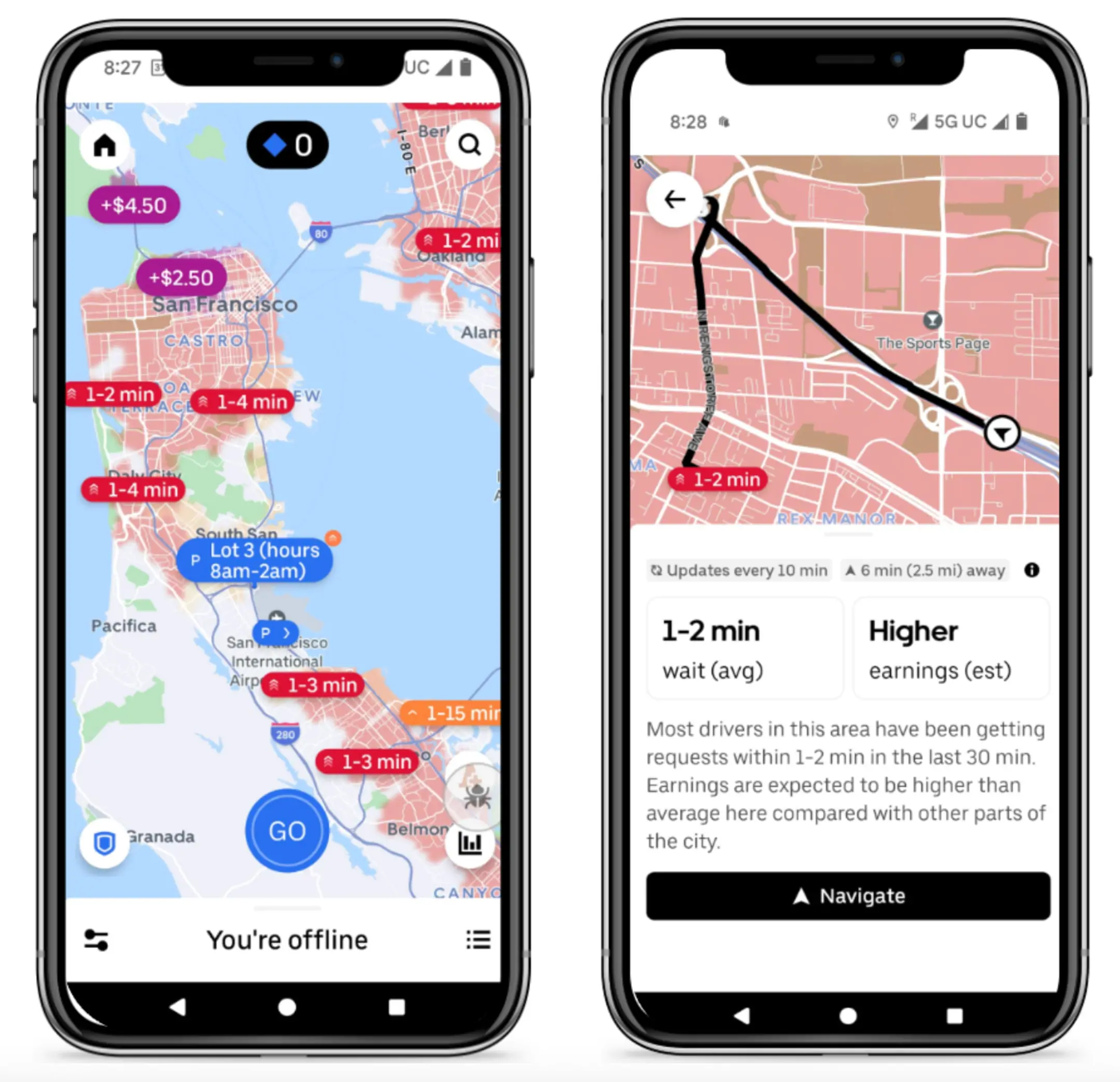
At Cache, pricing also helps address imbalances, though the mechanism and objective are focused on portfolio-based pricing, as opposed to Uber’s demand-based pricing.
An exchange fund's investors collectively own a pooled portfolio built from their stock contributions, which as a whole are intended to track an underlying benchmark index.
A new contribution, depending on the stock, could move that portfolio closer to or farther from its benchmark. That's why the management fee for a given stock reflects more than whether it's in high demand from investors or a rarer stock with fewer people looking to contribute it. A fee can move up when a stock is more sought-after than the fund can absorb, or down when it's exactly what the fund needs more of.
The methodology weighs a fund's portfolio composition, expected contributions, available capacity, and a contribution's effect on tracking error. Demand is one input, but not the entire model. That balance is what lets the fund keep growing without drifting from its benchmark.
Growth is a composition problem
If you're new to exchange funds, we've written a full guide. The short version: a group of investors each contribute a concentrated position, those contributions pool into a single partnership built around a benchmark index with contributions generally structured to defer capital gains. You're diversified from day one, and the taxes are deferred, though you commit for seven years.
Here's the part that makes them operationally interesting. The fund is built mostly out of what people bring in.
Unlike a cash-funded portfolio, an exchange fund relies heavily on the stocks investors contribute. Our inventory depends on who walks in the door and what they happen to hold. Portfolio management tools like Index Sync help fill gaps, but attracting the right contributions remains an important way to improve the mix.
For example, our fund UNIX is benchmarked to the Nasdaq-100. If we take in $200 million of Nvidia and nothing else, we've made the fund larger and more concentrated.
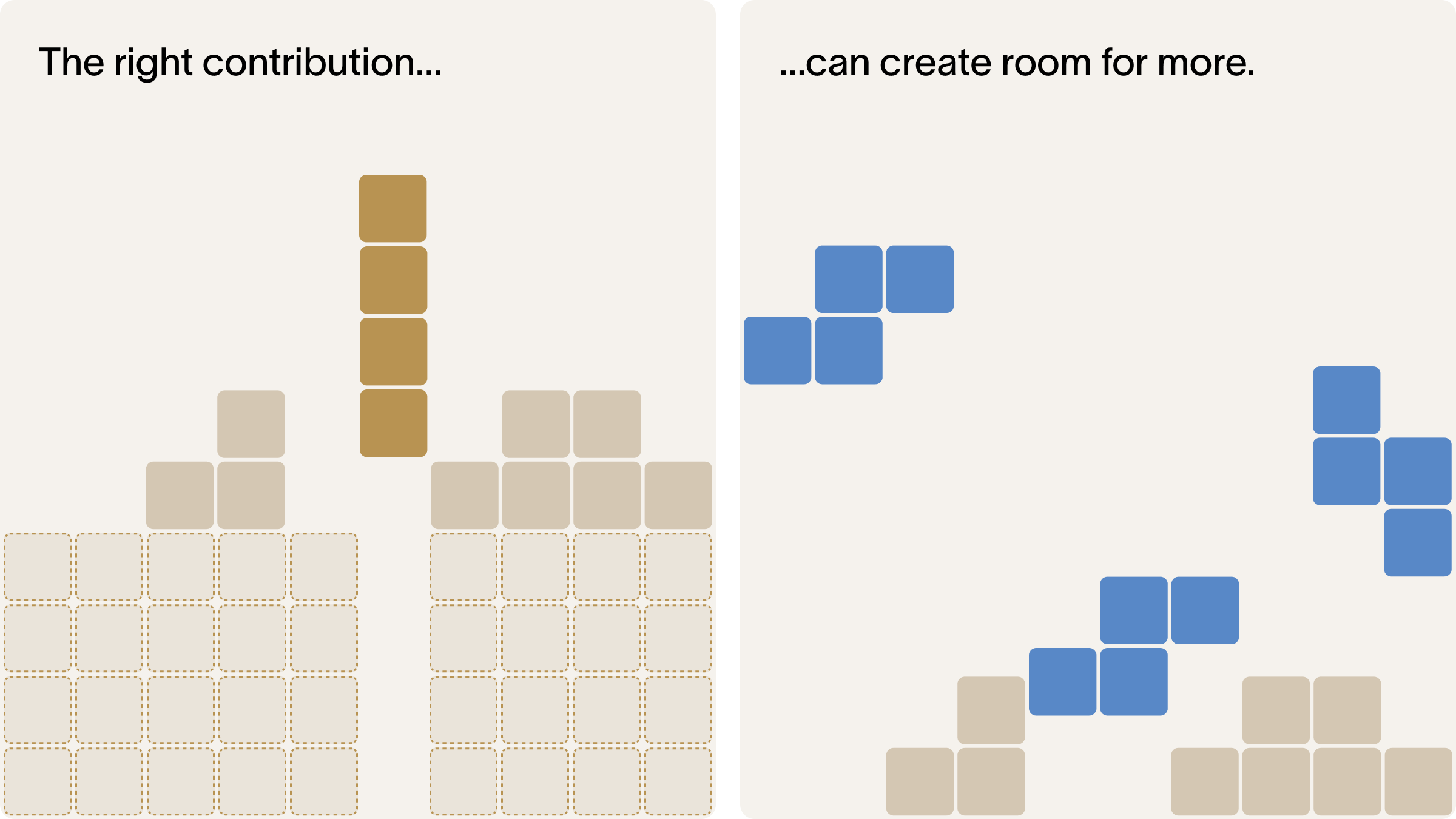
It's a game of Tetris. Some pieces slot in and clear rows. Others could land badly and stack up the board. The difference is that we don't get to choose which piece comes next, and the pieces arrive from thousands of independent people who have no idea what the board looks like.
A contribution that fills a gap can also create room for stocks we already receive in abundance. Attracting the right shares can help us accommodate investors who would otherwise have to wait.
Supply is spiky, and it isn't random
Some stocks show up constantly. Technology companies compensate with stock, so Nvidia, Apple and Alphabet arrive in volume. For those names, requests often far exceed what we can accept.
Others appear more irregularly. Names like Pfizer, Coca-Cola, and Chevron. They have meaningful weights in some of our benchmarks, but fewer people show up holding a concentrated position in them. When one fills a gap in the relevant fund, that contribution can be worth a great deal more to the portfolio than another enrollment in a stock already near its limit.
Same dollar amount. Very different value to everyone already invested. For a long time we priced them identically. We're changing that.
Two experiments that led here
We've been testing this quietly, and two cases from this year made it clear.
Micron, and a gap we needed to close.
In early 2026, our allocation to Micron was smaller than its weight in the index. As a fund approximating the Nasdaq-100, that difference is exactly what we work to close. It wasn't by design. Fewer people were arriving at Cache holding a concentrated position in Micron than holding Nvidia.
Then the stock rallied, crossing a trillion dollars in market cap on May 26. Holding less of it than the benchmark during that rally became more consequential.
So we discounted the management fee on Micron and other semiconductor names where the portfolio had gaps. In June and July, UNIX received approximately $21.1 million in completed Micron, AMD, and Intel contributions, valued at their respective fund closes. Discounts were one part of that effort, alongside outreach and additional opportunities to join the fund.
SpaceX, and the opposite problem.
SpaceX went public on June 12 and joined the Nasdaq-100 on July 7, entering at roughly a 1.3% weight. As its staggered lock-ups began to expire, shareholders with concentrated positions gained new opportunities to diversify.
As reported in our August 6 communication, the value of SpaceX shares investors requested to contribute exceeded our available capacity by more than 200 times. There was no version of this where everyone got in immediately. We capped initial allocations at $1 million per investor, and we raised the management fee.
The two measures serve different purposes. A higher fee can help moderate excess demand, while discounts can support contributions the fund needs to improve its portfolio mix. Allocation caps limit how much scarce capacity any one investor can receive.
Our guiding principles
Pricing adjustments should be the exception, not the rule. We expect pricing adjustments to be concentrated in stocks where expected contributions differ substantially from what the fund needs. The stock-specific adjustment reflects the fund's needs. Other applicable pricing terms, including advisor discounts, are applied separately.
Caps mean some people wait. Limited SpaceX capacity meant some investors would have to wait. That's a real cost, and it falls on people trying to solve a real problem. Pricing helps manage demand for that limited capacity; it doesn't guarantee an allocation.
The balance is crucial. Every contribution we accept sits in a portfolio that other people already own. When we adjusted pricing around Micron or SpaceX, those decisions were intended to improve the portfolio that all investors share.
For someone paying a higher fee, however, there is a real additional cost. Fees reduce returns, and the investment still needs to make sense for that person's circumstances. We owe them a clear explanation of the adjustment and its terms.
You'll see your applicable management fee clearly during enrollment. A quote is valid for the period and conditions stated with it; your fund documents set out the fee terms for your investment.
At Uber, price signals helped the marketplace adjust quickly. We're using the same idea for a harder problem with entirely different underlying challenges: keeping a steady, balanced flow across hundreds of tickers, when we don't control what arrives.
Most of the time the answer is standard pricing. Sometimes the board needs a line piece, and the right contribution is worth incentivizing.
<p class="blog_disclosures-text">The semiconductor contribution figure is from Cache's internal records retrieved September 5, 2026, and reflects completed June–July contributions at fund-close values. It does not measure investment performance or the incremental effect of fee discounts. The SpaceX comparison reflects requested contribution value relative to available capacity reported on August 6, 2026; requests are not completed investments. Historical pricing and capacity examples do not establish current terms or guarantee availability.</p>
<p class="blog_disclosures-text">Cache Securities LLC is a registered broker-dealer and member FINRA/SIPC. Cache Advisors LLC is an SEC-registered investment adviser. This post is for educational purposes only and is not investment, tax, or legal advice.</p>
<p class="blog_disclosures-text">An exchange fund is not an ETF. Exchange funds are designed to defer capital gains taxes, not to eliminate them; your original cost basis carries over and taxes may be owed upon disposition. Participation generally requires a seven year holding period and is limited to accredited investors or qualified purchasers, depending on the fund. Diversification may help manage risk but does not guarantee a profit or protect against loss. All investing involves risk, including possible loss of principal. Fee arrangements, including any discounts or premiums applied to specific enrollments, are described in the fund's offering documents, which should be read in full before investing.</p>
The Cache Exchange Fund can help.


Make better decisions for managing your large stock positions.
Sign up to receive all our insights and data.