






Cache Surpasses $1 Billion in Assets: How We Reawakened a Dormant Category

Srikanth Narayan
Founder and CEO
A Powerful Solution, Hidden in Plain Sight
For over fifty years, exchange funds have existed quietly in the financial backwaters.
They solved a real problem, but only for a narrow set of investors, primarily ultra-wealthy families with a private banking relationship. The structure worked, but the experience rarely evolved. High minimums, high fees, opaque processes, and slow execution became accepted constraints rather than problems to solve.
By the early 2020s, when I first began exploring an exchange fund for my own portfolio, they felt more like a relic than a product in active development. It felt frozen in time.
The World Had Changed
The way Americans build wealth has shifted over the last few decades.
Equity compensation has become a primary driver of net worth for employees at many of the largest companies in the country, particularly in tech.
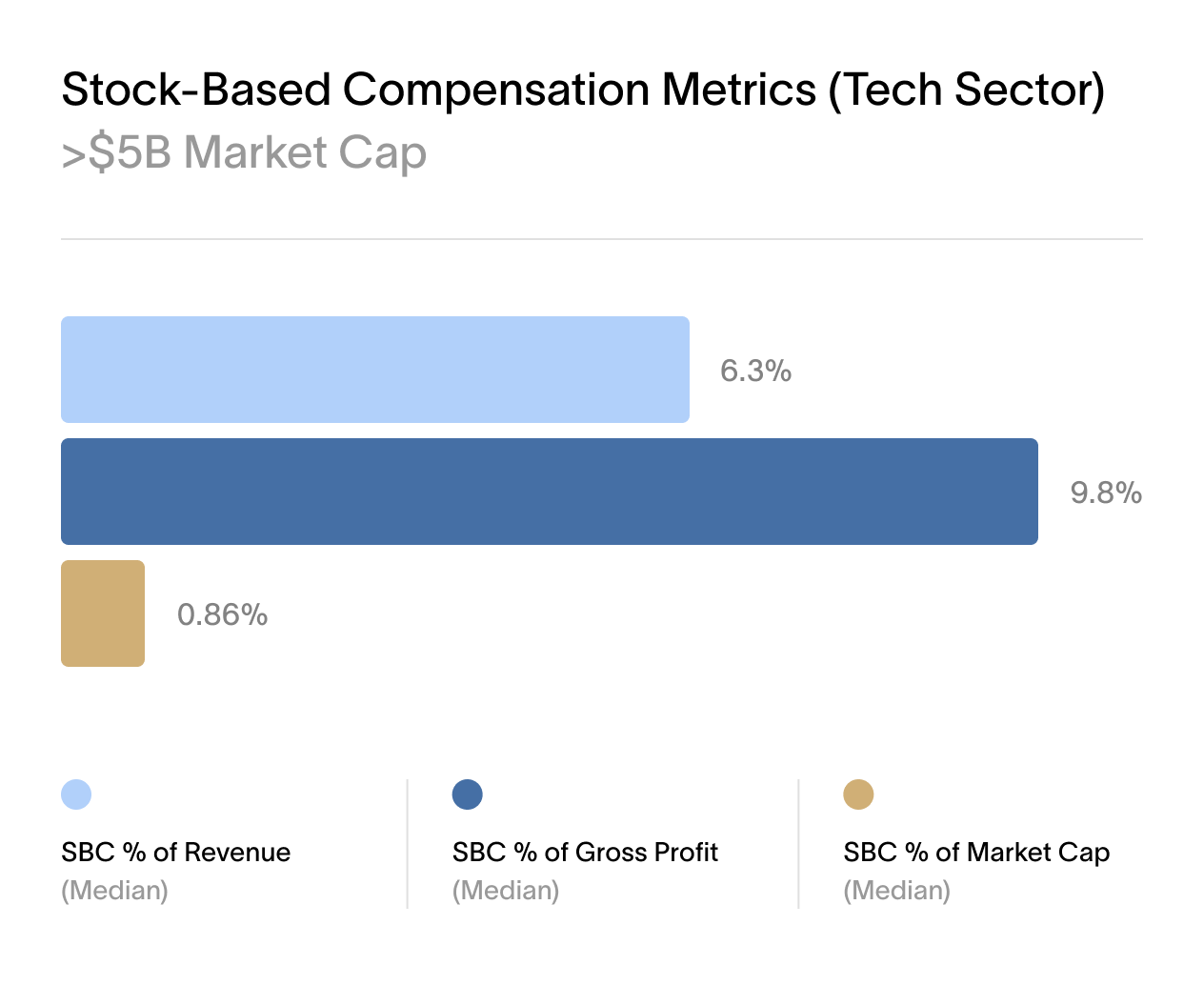
range annually.
Source: https://quiet.com/essays/can-silicon-valleys-equity/
At the same time, public markets experienced a historic expansion, further amplifying single stock exposure across portfolios. Since its 2009 lows, the S&P 500 has grown nearly 10x, while the Nasdaq-100 has grown over 20x.
The outcome is predictable: more investors now face concentration risk, and earlier in their financial lives. Still, the industry consensus was that demand for exchange funds existed only among the ultra-wealthy.
Demand was building up quietly. The access wasn’t.
What Cache Set Out to Do
Cache was built with a simple mission: help our clients keep more of their hard-earned equity. Unlike traditional brokerages that typically offer an extensive menu of investment products, we focus on one thing only: concentrated stock positions.
The Cache Exchange Fund became the foundation of that effort.
The goal was not to invent a new financial structure but to modernize access to an existing one. That meant lowering barriers, improving transparency, and building predictable execution into a product that historically required bespoke relationships to navigate.
From Launch to $1 Billion
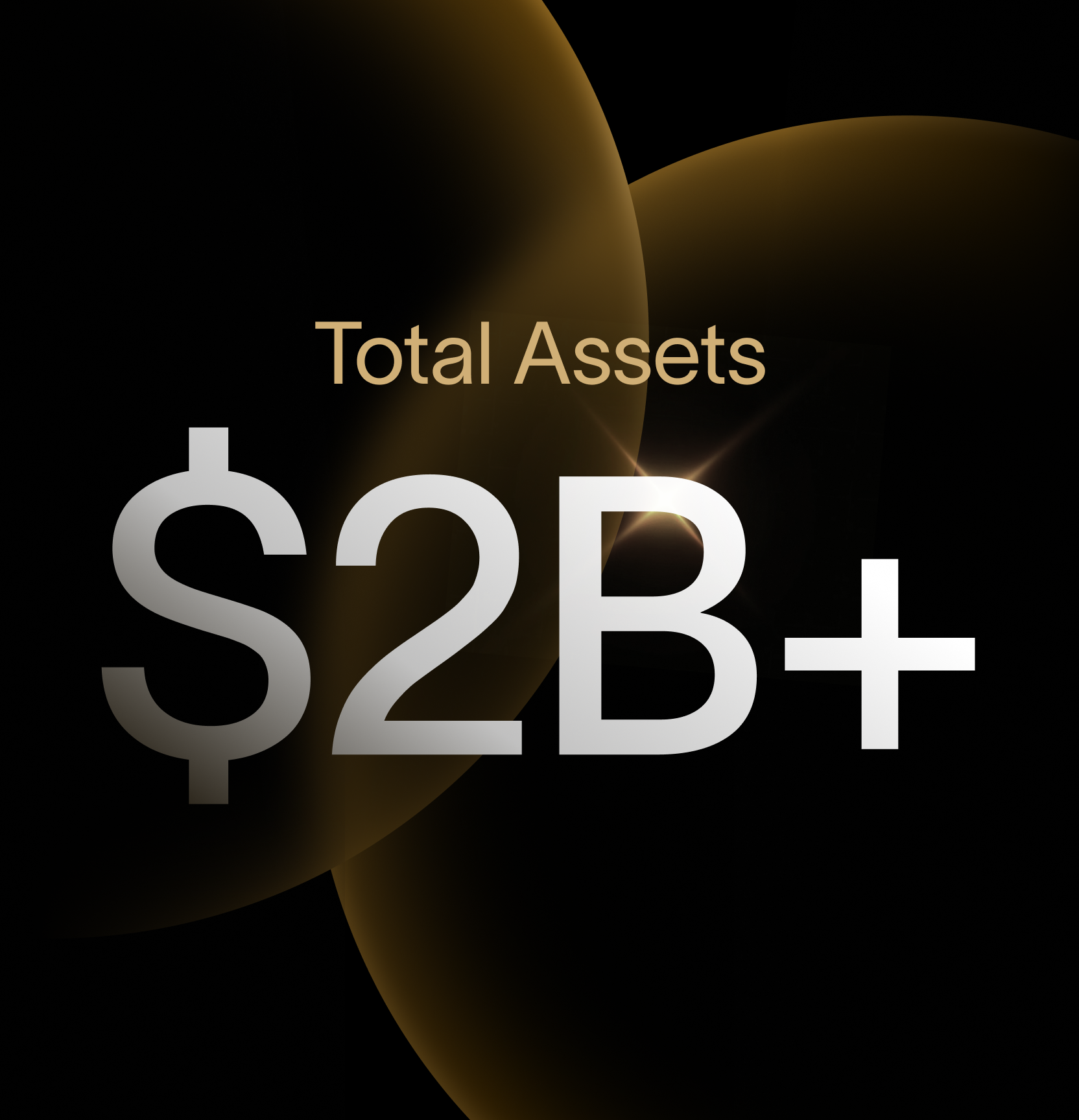
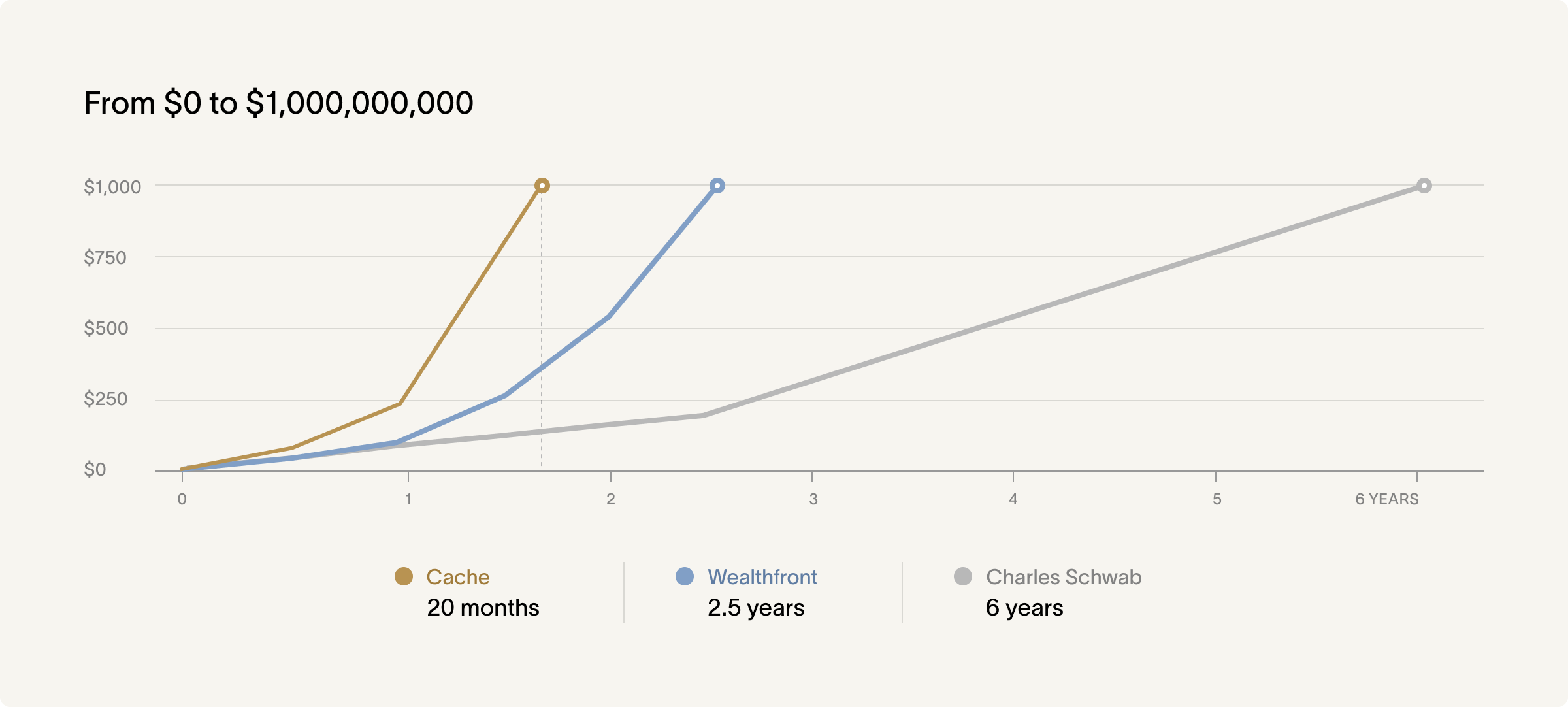
Just twenty months after launch, Cache has crossed $1 billion in total platform assets.
What began as a single exchange fund in March 2024 has grown into a broader platform spanning multiple benchmarks and investor profiles, supported by advisors and investors looking for practical ways to manage concentration without forcing a taxable sale.
The pace of adoption matters, not as momentum for its own sake, but as evidence of unmet demand.
History shows that when friction is removed from a high-value financial product, adoption accelerates quickly:
- Charles Schwab introduced the discount brokerage model. Within six years, it reached $1 billion in assets.
- Wealthfront introduced the robo-advisor model. In roughly 2.5 years, it reached the same mark.
- Cache modernized access to tax-efficient diversification. In less than two years, the platform surpassed $1 billion in assets.
Source: https://www.wealthfront.com/blog/one-billion-assets-under-management/
Scale Paired With Discipline
In 2025 alone, Cache grew ~4×. But growth only matters if there’s consistent value being delivered.
Throughout 2025, our exchange funds tracked their benchmarks in line with our expectations. For example, our flagship exchange fund, UNIX, achieved a 0.99 correlation to the Nasdaq-100 in Q3 2025.
This combination matters.
Together, they suggest something more durable: a breakthrough product returning a category to relevance.
Where This Leaves the Category
In 2025, concentration risk moved from a niche concern to a mainstream planning conversation. Exchange funds are now evaluated alongside other core tools, not brought in for special situations.
Crossing $1 billion is a marker of relevance, and it’s just the beginning.
The forces creating concentrated portfolios continue to accelerate. Stock-based compensation, coupled with rising stock prices of the dominant companies expand the problem for today's investors. The need for thoughtful, tax-aware diversification is becoming more common.
Cache’s focus remains the same: build practical tools that help investors make the most of their concentrated stock positions.
We look forward to helping you do more in 2026!
And there's one last close for 2025 on Dec 30th. Let us know if we can help!


Securities are offered through Cache Securities LLC, Member FINRA/SIPC. Advisory services are provided by Cache Advisors LLC, an SEC-registered investment adviser to the Cache Exchange Funds. Both entities are under the common control of Cache Financials, Inc. (“Cache”). Registration does not imply a certain level of skill or training.
Total assets refer to gross assets under management across all Exchange Funds, managed by Cache Advisors, LLC, assets pending future contribution, and assets utilizing a Collar Advance. Assets pending contribution may be withdrawn at any time and are not managed by Cache. Cache does not directly manage Collar Advance assets. All figures are as of Dec 15, 2025.
Performance data represents past performance and is not indicative of future results. Benchmark data is sourced from Bloomberg as of September 30, 2025. Returns are shown net of fees and expenses.
“Index Sync” refers to the Cache Exchange Fund strategy of investing indirectly in unaffiliated Exchange-Traded Funds (ETFs) that track broad market indices, providing greater diversification than holding contributed securities directly. Index Sync is available only to certain Qualified Purchaser funds. Alpha Architect U.S. Equity ETF (AAUS) is advised by Empowered Funds, LLC (doing business as ETF Architect) with Alpha Architect, LLC as sub-adviser. Cache is not affiliated with either firm.
Correlation measures how closely an investment’s returns move relative to a benchmark. Beta measures volatility relative to a benchmark; values above 1 indicate higher volatility, and values below 1 indicate lower volatility. A tracking error of 0.00% represents perfect correlation. All measures are historical and not predictive of future results.
Cache Exchange Funds are alternative investments available only to eligible investors. They are designed for long-term investors willing to accept limited liquidity and higher fees than traditional investments. Exchange funds defer but do not eliminate capital gains taxes. Diversification does not guarantee profit or protect against loss. All investments carry risk, including loss of principal.
Cache Exchange Fund Mosaic, LLC is a newly launched fund with an anticipated first close on December 3, 2025, benchmarked to the S&P Growth Index. Cache Exchange Funds are benchmarked to indices but do not directly track their performance. Portfolio exposure is maintained through contributed securities and diversified ETFs, which are subject to change. Holdings information is current as of publication.
Cache Financials Inc. | 95 Third St, Floor 2, San Francisco, CA 94103.
The Cache Exchange Fund can help.


Make better decisions for managing your large stock positions.
Sign up to receive all our insights and data.