


The Cache Aperture: what it is, how it works, and when the next one opens
Published Updated
The next Aperture
The Fall 2026 Aperture is open for enrollment as of August 31, 2026.
- Enrollment opens: August 31, 2026
- Last date to transfer stocks: October 27, 2026
- Stocks must be on platform by: November 5, 2026
- Close date: November 10, 2026
Enrollment officially closes roughly 10 days before the close, but the practical deadline is the stock transfer initiation date, not the close itself. Stock transfers from most custodians take 3 to 5 business days to settle, and the official close date lands just before Veterans Day to minimize operational disruptions.
You don't have to wait for one. Cache runs closes every two weeks year-round, and most investors come in through one of those. If your stock and size fit current fund capacity, you can enroll now and contribute at the next biweekly close. If capacity for your stock is constrained, we'll hold your enrollment and tell you where you stand.
Check eligibility for your stock · Run the concentrated stock calculator
Apertures Cache has run
| Aperture | Close date |
|---|---|
| Fall 2025 | December 3, 2025 |
| Winter 2026 | March 11, 2026 |
| Summer 2026 | July 15, 2026 |
Each was a coordinated close across UNIX, Bedrock, and Mosaic.
How Apertures fit into Cache's calendar
Cache runs biweekly closes year-round. Every two weeks, eligible investors can contribute concentrated stock into one of our Flagship Funds and receive fund shares in exchange. That covers the steady flow of new investors.
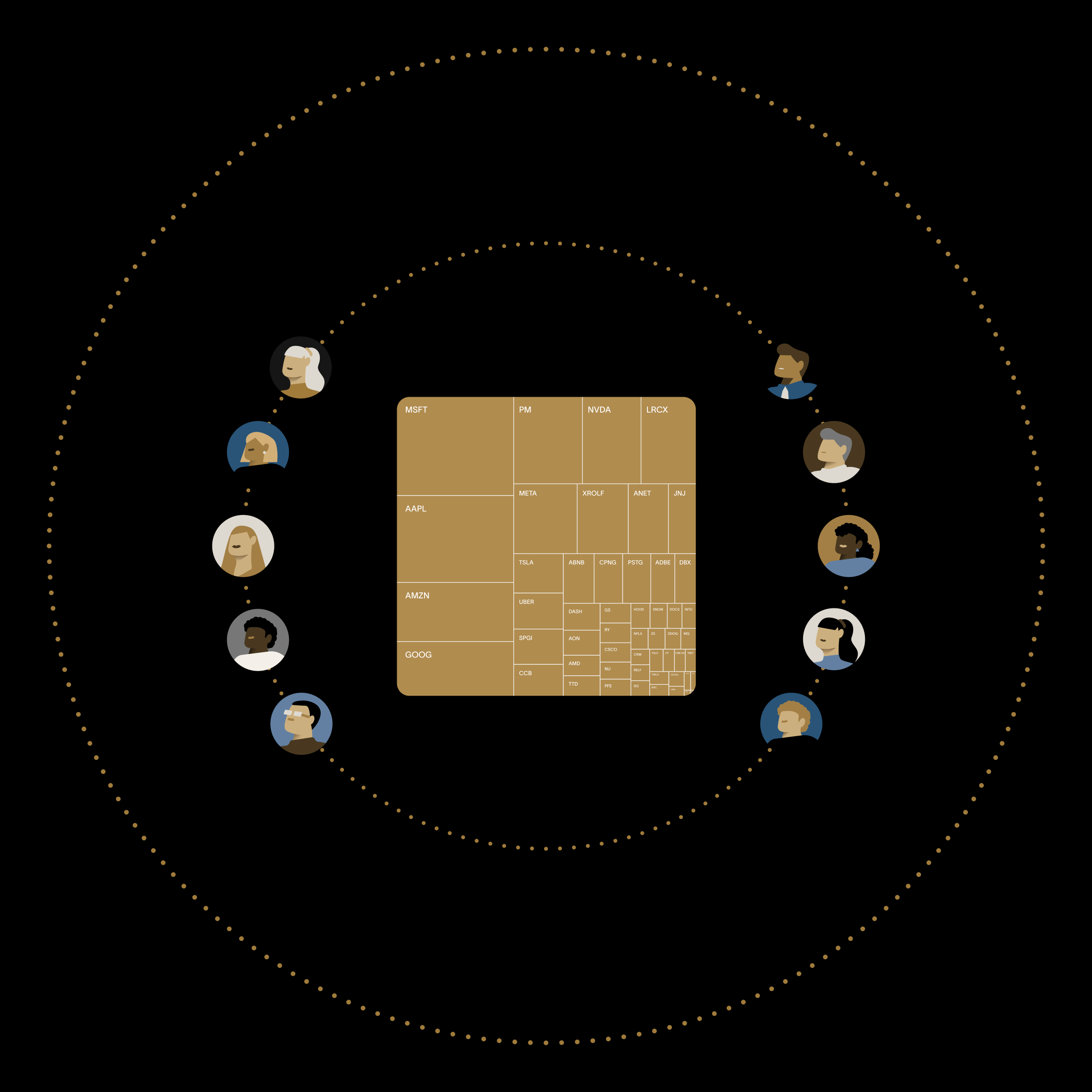
When portfolio management calls for it, Cache schedules an Aperture: a coordinated close across UNIX, Bedrock, and Mosaic. By funneling enrollments to a single close window, an Aperture can accommodate larger contributions than any one biweekly close.
Enrollment closes roughly 10 days before an Aperture, but the deadline that actually binds is the stock transfer initiation date. Transfers from most custodians take 3 to 5 business days to settle, and each window carries a buffer for weekends and holidays so shares land in time.
The Aperture journey
Here's the full path, from enrollment to fund shares.
| Step | What happens | Timing |
|---|---|---|
| 1. Enroll | You sign up, verify QP status, and pick your fund | Anytime during the enrollment window |
| 2. Get matched | Cache confirms capacity for your stock and size | Immediately |
| 3. Accept your invite | You review allocations, fees, and the fund basket | Before the invite expires |
| 4. Initiate Transfer | Transfer your shares from your existing broker to Cache | By the last transfer date |
| 5. Shares land | Stock transfer settles (3 to 5 business days from most custodians) | Before the "Stocks on platform by" date |
| 6. Close day | The fund accepts contributions; you receive fund shares | Close date |
There's a reason the last transfer date sits two weeks before the close. Your shares have to be settled in your Cache brokerage account, not in transit, on close day. We build the window to absorb weekend and holiday calendars so a transfer initiated on the last allowed day still has room to settle.
Cache Exchange Funds are custodied at Bank of New York Mellon, the world’s largest custodian bank.
How exchange funds work
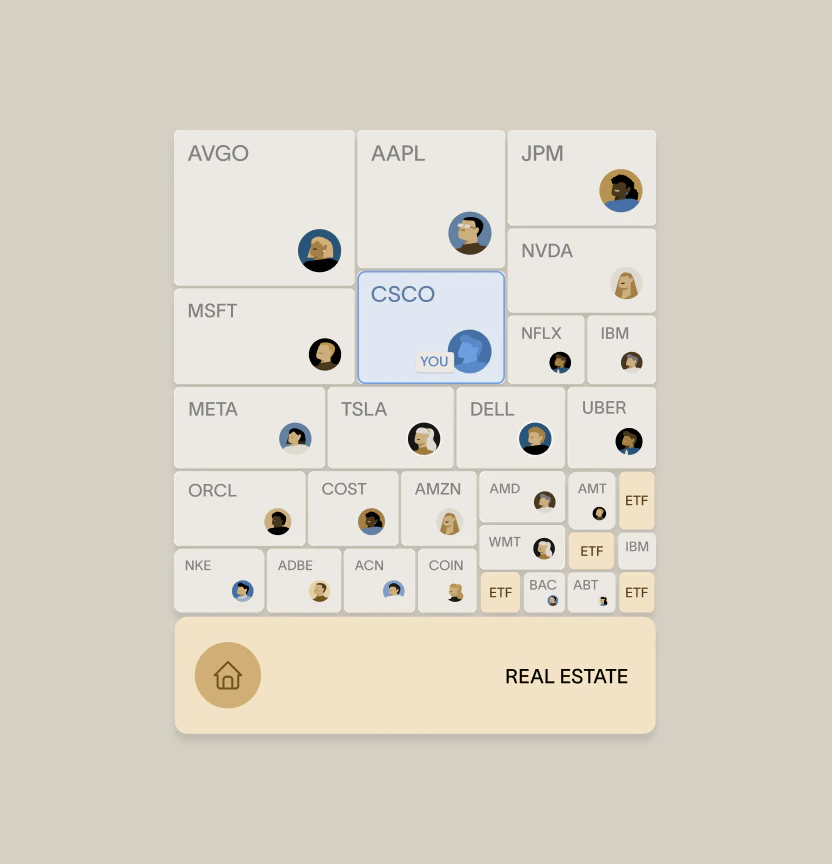
An exchange fund allows multiple investors to contribute concentrated stock positions and receive shares of a diversified fund without triggering a taxable event at contribution. Here's the mechanic in plain form:
- You contribute, say, $1M of your stock into the fund
- Other investors contribute other qualifying positions (other stocks or cash)
- Everyone receives fund shares representing a diversified basket
- Your cost basis carries over from the contributed stock to your fund shares
- Seven years is the window to realize the full tax benefits; investors can exit earlier; however, they do not receive the tax benefit
At year 7, you can redeem fund shares for a diversified basket of securities (not cash), still without triggering tax. Your cost basis carries through to those distributed securities. You only realize a gain if you eventually sell them.
A common question we get: is an exchange fund the same as a 1031 exchange? No. 1031 exchanges apply to real estate. Exchange funds use Section 721, which covers tax-deferred contributions of appreciated property (including securities) into a partnership. The spirit is similar (a swap without a taxable sale), but the code section, underlying requirements, mechanics, and asset class differ.
Why concentration is a problem worth solving
If a large share of your net worth sits in one stock, especially one you've worked for, two things are quietly working against you.
→ Concentration risk. Holding one name means living with the full range of outcomes for that name. Even great companies see 50% to 70% drawdowns: META in 2022, NVDA in 2018 before its AI rally, AMD below $2 for most of a decade before it ran. And the timing of when you need liquidity isn't always yours to choose. A house, a kid's tuition, retirement, a market drop: life tends to force the decision, and waiting for the next all-time high often becomes its own trap. See the risks of concentration play out in this interactive story from a real client.
→ Tax on diversification. Selling down to rebalance means paying long-term capital gains today. On a position with $2M of embedded gains, federal and state taxes can run $500K or more before you've diversified a single dollar. And the dollars you pay in taxes stop compounding. Over a seven-year horizon, that's potentially significant amounts in lost growth on top of the tax itself.
An exchange fund is designed to solve both at once: diversify into a basket of securities without triggering the sale, and keep your full position compounding for the next seven years.
For a deeper read on concentration risk and the options for managing it, see our guide to managing concentrated stocks.
This strategy may not suit every investor. Consider your investment objectives and risk profile.
Who qualifies
Cache Flagship Funds are open to Qualified Purchasers (QPs). A QP is, broadly:
- An individual or family office with $5M or more in investments
- An entity with $25M or more in investments
The $100K minimum contribution applies to all Cache Flagship funds. If you're an accredited investor but not a QP, you're not eligible for Flagship.
Cache offers a separate Access series open to accredited investors, with the same $100K minimum; two main differences are the Access series has a 2-year minimum hold, and a stocks-only redemption basket. Apertures are open to QPs only. Access series funds participate in regular biweekly closes.
Cache vs. legacy exchange funds
Exchange funds have existed for decades, offered by firms like Eaton Vance and Goldman Sachs. Cache's product differs in four concrete ways.
| Dimension | Legacy providers | Cache |
|---|---|---|
| Minimum contribution | $500K to $1M | $100K across Flagship and Access |
| Close frequency | Quarterly or semi-annually | Biweekly, plus periodic Apertures |
| Onboarding time | Months, historically | Days |
| Investor experience | Paper-driven, advisor-mediated | Self-serve web app with advisor support |
What clients say
"The biggest benefit for me was peace of mind. I'm still exposed to the market, but no single company dictates my financial future anymore. That alone made it worth it."
- Vinay, VP of Engineering · Watch Vinay's full review
"By diversifying with Cache, I was able to firstly sleep more peacefully because now I am highly diversified."
- Rajesh, EVP of Engineering · Watch Rajesh's full review
"Once I made the decision to go with Cache, there's a sense of relief. I'm out from under such a huge investment in this one company."
- Joel, Real Estate Executive · Watch Joel's full review
Testimonials are provided by current Cache investors and may not be representative of the experience of other customers. A conflict of interest exists in that the clients are investors in a Cache investment. The testimonials are no guarantee of future performance or success. The individuals were not compensated for their testimonials, and these are not paid testimonials.
Frequently asked questions about Aperture
These FAQs cover questions specific to the Aperture close process. For broader exchange fund questions (how Section 721 works, year-7 mechanics, fund-by-fund comparisons, fees, tax reporting, estate planning), visit our help center.
What's the difference between an Aperture and a regular Cache close?
Regular Cache closes happen every two weeks with steady-state capacity. Apertures are larger close windows Cache schedules periodically as a portfolio management decision. They can expand capacity for new investors, and run only in the Flagship series.
When is the next Aperture?
Fall Aperture 2026 enrollment began August 31, 2026, and closes November 10, 2026. Cache runs closes every two weeks in the meantime, so enrollment stays open year-round.
What stocks are accepted in an Aperture?
The stock list varies each Aperture based on fund need and available capacity. Check eligibility for your specific stock and we'll tell you whether we can accept it in the current window.
What if my stock isn't on the current list?
Enroll anyway. We'll note your interest and reach out when we can accommodate you, either in a biweekly close or the next Aperture.
How long does a stock transfer take, and why does the deadline hit before close?
Usually 3 to 5 business days from major brokerages (Schwab, Fidelity, E*TRADE, Morgan Stanley). Most transfers happen via ACATS (the standard between US brokerages); some go through DTC depending on the source account. Shares have to be settled in your Cache brokerage account on close day, not in transit, so the last transfer date sits two weeks before the close to absorb weekends and holidays.
What happens if I miss the transfer deadline?
Your contribution rolls to the next available close. That might be a biweekly close two weeks later, or the next Aperture.
Can I participate in every Aperture?
Yes. There's no limit on how many Apertures or biweekly closes you can contribute to, assuming you have additional eligible stock to contribute.
Do I keep market exposure while my shares are in transit?
Your shares remain yours during the transfer, and you keep market exposure to your existing investment; they just change custodians. Once at Cache, they sit in your brokerage account until the close date. On closing day, post-market close, they're contributed, and you receive fund shares. Cache Exchange Funds are custodied at Bank of New York Mellon, the world’s largest custodian bank.
Ready to see if you qualify?
Check eligibility for your stock, or run your numbers against a taxable sale with the calculator.
The Cache Exchange Fund can help.

Make better decisions for managing your large stock positions.
Sign up to receive all our insights and data.